If your bank account was suddenly restricted, frozen, or placed under review, it was most likely triggered by an automated banking risk system. Banks monitor accounts in real time for unusual activity, identity issues, and compliance concerns. When something gets flagged, access to transfers, withdrawals, or debit card purchases may be temporarily limited while the bank reviews the activity.
BankingAccessIssues.com explains why restrictions happen, what triggers them, and what steps are most likely to restore access quickly. Choose the situation that matches yours below.
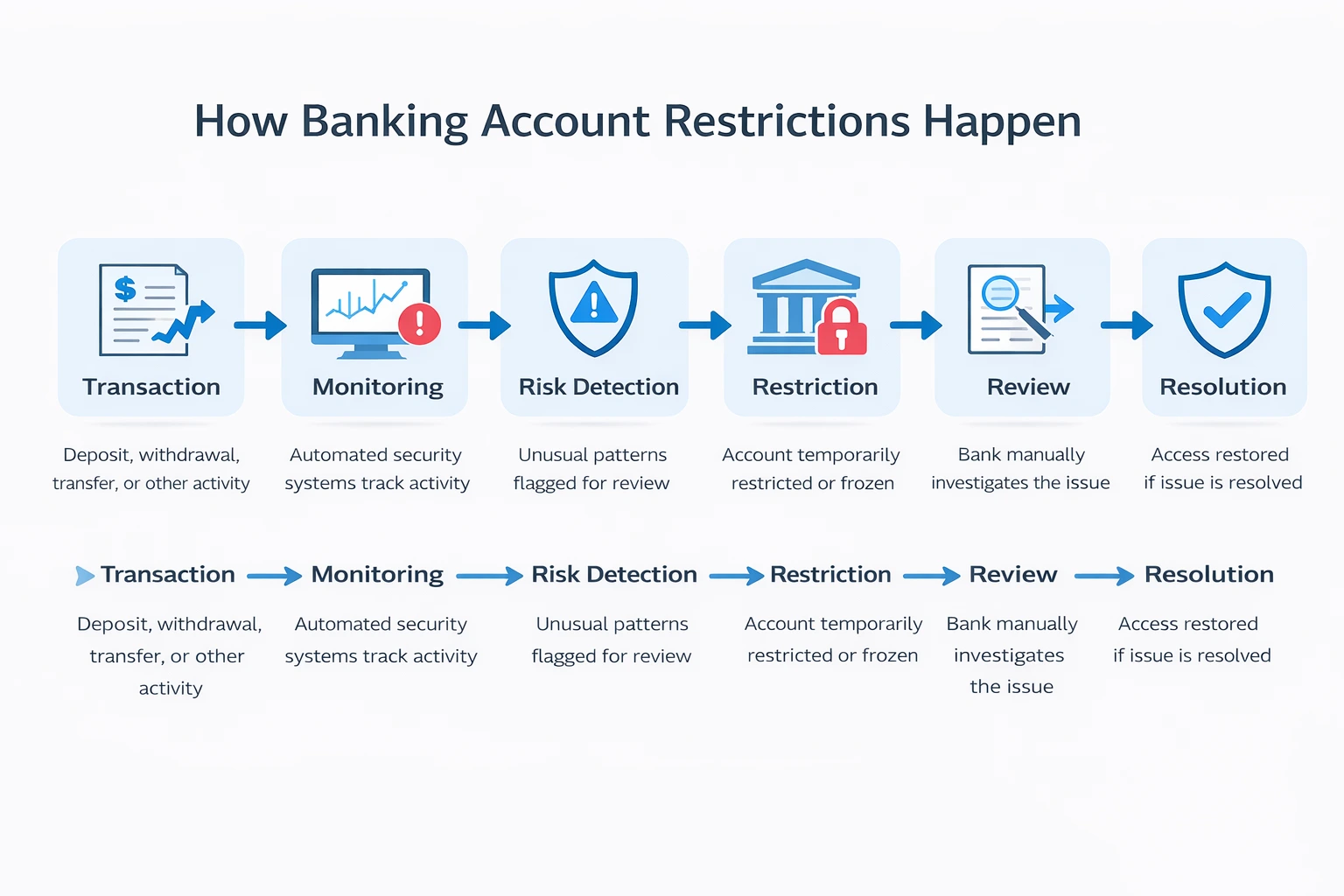
Most restrictions are triggered by automated banking systems. The diagram below shows how this process typically works.
Start Here: Choose the Situation That Matches Your Account
If your bank account was limited, restricted, frozen, or placed under review, start with the guide that best matches your situation:
- Why your bank account is limited
- Why your account is restricted
- Steps to fix a restricted account
- How long restrictions usually last
- What under review means
- Why bank accounts get frozen
Main Guide: Start With the Full Restriction Breakdown
If you want the complete explanation of what causes restrictions, how they work, and what steps are most likely to restore access, begin here:
Bank Account Restrictions: Causes, Fixes, and How to Get Full Access Back
Common Banking Access Problems Explained
These are some of the most common real-world situations that lead users to this site:
- Your account was restricted after a deposit
- Your account was restricted after a transfer
- Your account was restricted after a Zelle payment
- Can a restricted account still receive money?
- Can you withdraw money from a restricted account?
Understand What Your Account Status Means
If your bank shows a status that does not look normal, these guides explain what it usually means and what to expect next:
- Restricted bank account meaning
- Bank account under review meaning
- Blocked bank account meaning
- Why bank accounts get frozen
- Why banks restrict accounts
What Usually Triggers a Bank Account Restriction?
Banks use automated monitoring systems to review account activity in real time. Restrictions often happen when those systems detect behavior that looks unusual, risky, or inconsistent with the account’s normal pattern.
- Large or unusual deposits
- High-risk transfers or repeated transfers
- Login or device inconsistencies
- Identity verification issues
- Internal fraud or compliance reviews
For the full explanation, read what triggers a bank account restriction.
What to Do If Your Account Is Restricted Right Now
If your account is currently limited, taking the right steps quickly can help reduce delays and avoid making the situation worse.
- Contact your bank directly through its official support channels
- Verify your identity if requested
- Review recent deposits, transfers, or payments
- Provide any documentation your bank asks for
For a full walkthrough, see what to do if your bank account is restricted.
To reduce the risk of future restrictions, see how to avoid bank account restrictions.
How Banking Restrictions Actually Work Behind the Scenes
Most modern banks use automated monitoring systems to review account activity continuously in real time. These systems analyze transaction behavior, login activity, transfer patterns, device usage, identity consistency, and account history to detect unusual or potentially risky behavior.
In many cases, restrictions are triggered automatically before a human reviews the account. Once activity is flagged, the system may temporarily limit transfers, withdrawals, debit card activity, or online banking access while fraud, security, or compliance teams review the situation and verify the activity.
Explore the Main Banking Access Issue Categories
Why You Can Trust BankingAccessIssues.com
BankingAccessIssues.com is an educational resource created by Robert Wolfe focused on explaining banking restrictions, fraud reviews, account freezes, transaction holds, and account access problems.
Content is based on real-world banking system behavior and regulatory guidance from organizations including the FDIC, CFPB, and FinCEN. The site explains how banks monitor account activity, detect fraud risk, review unusual transactions, and temporarily restrict access during internal investigations or verification reviews.
Articles are written to help users understand what is happening inside the banking system, what commonly triggers restrictions or reviews, what steps banks usually require next, and how account access is typically restored.
If you still have questions about banking access issues, these quick answers cover the most common situations.
Frequently Asked Questions About Banking Access Issues
Why did my bank account get restricted?
Bank accounts are usually restricted when a bank detects unusual activity, needs to verify your identity, or flags potential risk. This can include large deposits, unusual transfers, login changes, or security concerns.
How long does a bank account restriction last?
Most restrictions last anywhere from a few hours to several days. In some cases, it may take longer if the bank requires additional verification or documentation.
Can I still receive money if my account is restricted?
In many cases, restricted accounts can still receive deposits, but outgoing transactions may be limited. This depends on the type of restriction placed on the account.
Can I withdraw money from a restricted bank account?
Some restrictions allow limited withdrawals, while others fully block access. The ability to withdraw funds depends on the reason for the restriction and the bank’s policies.
What is the fastest way to fix a restricted bank account?
The fastest way to restore access is to contact your bank directly, verify your identity, confirm recent transactions, and provide any requested documentation as quickly as possible.
Why do banks freeze accounts without warning?
Banks use automated monitoring systems to detect potential fraud or risk in real time. When certain patterns are flagged, accounts may be restricted or frozen immediately while the bank reviews the activity.